Knee replacement is an elective operation. That single word carries real meaning: except in rare circumstances, there is no medical urgency and the decision belongs to you. The surgeon’s role is to explain what the operation can and cannot achieve, and when the balance of benefit and risk tips in its favour.
An X-ray showing severe arthritis does not by itself mean you need a replacement. Many people have advanced changes on imaging and manage comfortably. Equally, some patients with moderate radiographic change are significantly disabled by pain. The imaging informs the decision; your symptoms and your function drive it.
The clearest indication is persistent pain that limits the life you want to lead — pain at night, pain that restricts walking distance, pain that no longer responds to weight management, activity modification, physiotherapy or injections. When non-surgical measures have been given a genuine trial and are no longer working, replacement becomes reasonable to consider.
Signs that knee replacement may be worth discussing
- ✓Pain that regularly disturbs sleep
- ✓Walking distance limited by knee pain
- ✓Difficulty with stairs, or needing support to rise from a chair
- ✓Pain persisting despite physiotherapy, weight management and injections
- ✓Increasing reliance on painkillers for daily activity
- ✓Deformity of the leg, or the knee giving way
What should be tried first
Structured physiotherapy to strengthen the quadriceps, weight reduction where relevant, activity modification, simple analgesia, and where appropriate an injection of corticosteroid or viscosupplementation. In selected younger patients with arthritis confined to one compartment, joint-preserving options such as osteotomy or partial replacement may be more appropriate than a total knee replacement. These options are discussed before surgery is recommended.
Practice across two health systems
Dr. Chetan M. Dojode has operated in both the United Kingdom and India. His UK joint replacement practice is recorded on the National Joint Registry (NJR) — the world’s largest independent registry of joint replacement outcomes, which tracks implant survival and revision rates for every procedure submitted. The principles of systematic outcome tracking and evidence-based practice that underpin his UK joint replacement practice continue to inform his joint replacement practice in Bengaluru.
Frequently Asked Questions
Am I too young for a knee replacement?
Age alone rarely decides the matter. The concern with replacing a knee in a younger patient is that the implant has to last longer and faces higher demands, making later revision more likely. In younger patients with arthritis confined to one compartment, joint-preserving surgery or partial replacement may delay or avoid total replacement.
Should I wait as long as possible before knee replacement?
Waiting indefinitely has costs. Prolonged pain leads to muscle weakness, reduced walking, weight gain and stiffness — all of which make recovery after surgery harder. Leaving a severe deformity uncorrected for years can also complicate the operation. The aim is neither to rush nor to delay past the point where you would recover well.
Can knee arthritis be treated without surgery?
Yes, and it should be tried first. Physiotherapy to strengthen the muscles supporting the knee, weight management, activity modification and injections all have a genuine role. Many patients manage well for years with these measures. Surgery is considered when they no longer control symptoms.
Is knee replacement worth it if I only have pain on walking?
It depends on how much that limitation matters to you. If pain confines you to short distances and prevents work, worship, travel or exercise, replacement may be justified even without night pain. The decision is about the life the knee is preventing you from living.
What happens at the consultation?
A full history, examination of both knees, hips and spine, and review of weight-bearing X-rays. Non-surgical options are discussed first. If replacement is appropriate, the operation, the implant, realistic expectations, risks and recovery are explained, and you are given time to decide.
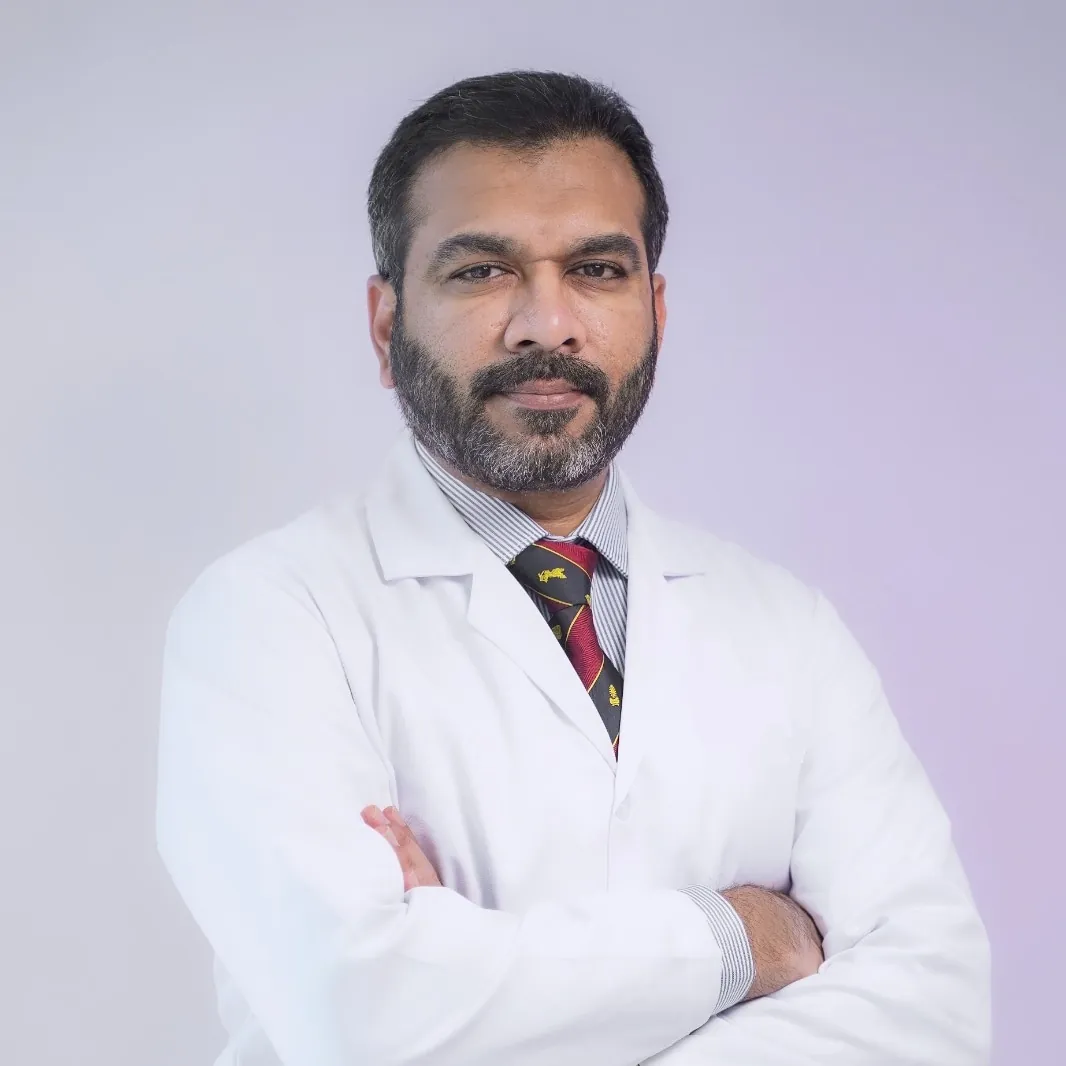
Dr. Chetan M. Dojode
FRCS (Tr&Orth) UK · FEBOT
GMC Specialist Register
Clinic Locations
OSR — OrthoSportsRobotics Clinic / Aarna Clinic, Sahakar Nagar
1182/1, 20th Main Road, A Block,
Bengaluru 560092