Patients travel for joint replacement — from elsewhere in Karnataka, from other states, and from overseas, including Indian families living abroad who prefer to have surgery here while close to relatives who can support their recovery.
Travelling for surgery is entirely reasonable provided it is planned properly. The two things that most often go wrong are inadequate assessment before arrival, and inadequate arrangements for follow-up after departure. Both are avoidable.
Where you are travelling a long distance, imaging and reports can be reviewed remotely before you commit to the journey. This will not replace a clinical examination — examination findings materially affect the plan and no responsible surgeon will finalise one without them — but it establishes whether the journey is likely to be worthwhile and what is realistically involved.
The essential planning question is length of stay. For a straightforward joint replacement, you should expect to remain in Bengaluru for a period after discharge before long-distance travel is advisable, particularly air travel, because of the risk of venous thrombosis in the early weeks. That period is discussed and planned in advance rather than improvised afterwards.
How a planned visit typically works
| Before travel | Scans and reports reviewed remotely. Indicative plan and likely length of stay discussed. |
| On arrival | Full clinical consultation and examination. Imaging repeated if needed. Definitive plan agreed. |
| Pre-operative | Anaesthetic assessment, blood tests and medical optimisation. |
| Surgery & inpatient | Operation and hospital stay, typically a few days for uncomplicated joint replacement. |
| After discharge | Remain locally for wound review and mobility progress before long-distance travel. |
| Ongoing follow-up | Structured remote follow-up, with local physiotherapy coordinated where you live. |
An honest note on travelling for surgery
Travelling for an operation has a real disadvantage: if a complication develops after you return home, the surgeon who performed the operation is not the person who will see you. This is manageable with proper planning — a clear discharge summary, implant details, imaging, a named local practitioner and structured remote review — but it should be understood before you decide rather than discovered afterwards. If the operation you need can be performed to the same standard close to home, that is often the better choice, and you will be told so.
Practice across two health systems
Dr. Chetan M. Dojode has operated in both the United Kingdom and India. His UK joint replacement practice is recorded on the National Joint Registry (NJR) — the world’s largest independent registry of joint replacement outcomes, which tracks implant survival and revision rates for every procedure submitted. The principles of systematic outcome tracking and evidence-based practice that underpin his UK joint replacement practice continue to inform his joint replacement practice in Bengaluru.
Frequently Asked Questions
Can my scans be reviewed before I travel?
Yes. X-rays, MRI or CT images and reports can be reviewed remotely to establish whether the journey is likely to be worthwhile and what is realistically involved. This does not replace clinical examination, which materially affects the plan, but it prevents wasted journeys.
How long will I need to stay in Bangalore?
For an uncomplicated joint replacement, expect a hospital stay of a few days followed by a further period locally for wound review and mobility progress before long-distance travel. Air travel in particular carries a thrombosis risk in the early weeks. The specific period is planned in advance for your case.
How is follow-up managed after I return home?
You will be given a discharge summary, implant details and imaging to take with you, with structured remote review at defined intervals and coordination with a local physiotherapist. Where ongoing local input may be needed, this is arranged before you leave rather than afterwards.
Do you see patients from overseas?
Yes, including Indian families living abroad who prefer surgery here with relatives able to support their recovery. The same principles apply: remote review of imaging first, full examination on arrival, and follow-up arrangements agreed before you travel home.
Is it better to have surgery close to home?
Often, yes — particularly if equivalent care is available locally, since managing any complication is far simpler when the operating surgeon is accessible. Travelling makes sense where the specific expertise you need is not available near you. You will be given an honest view on which applies in your case.
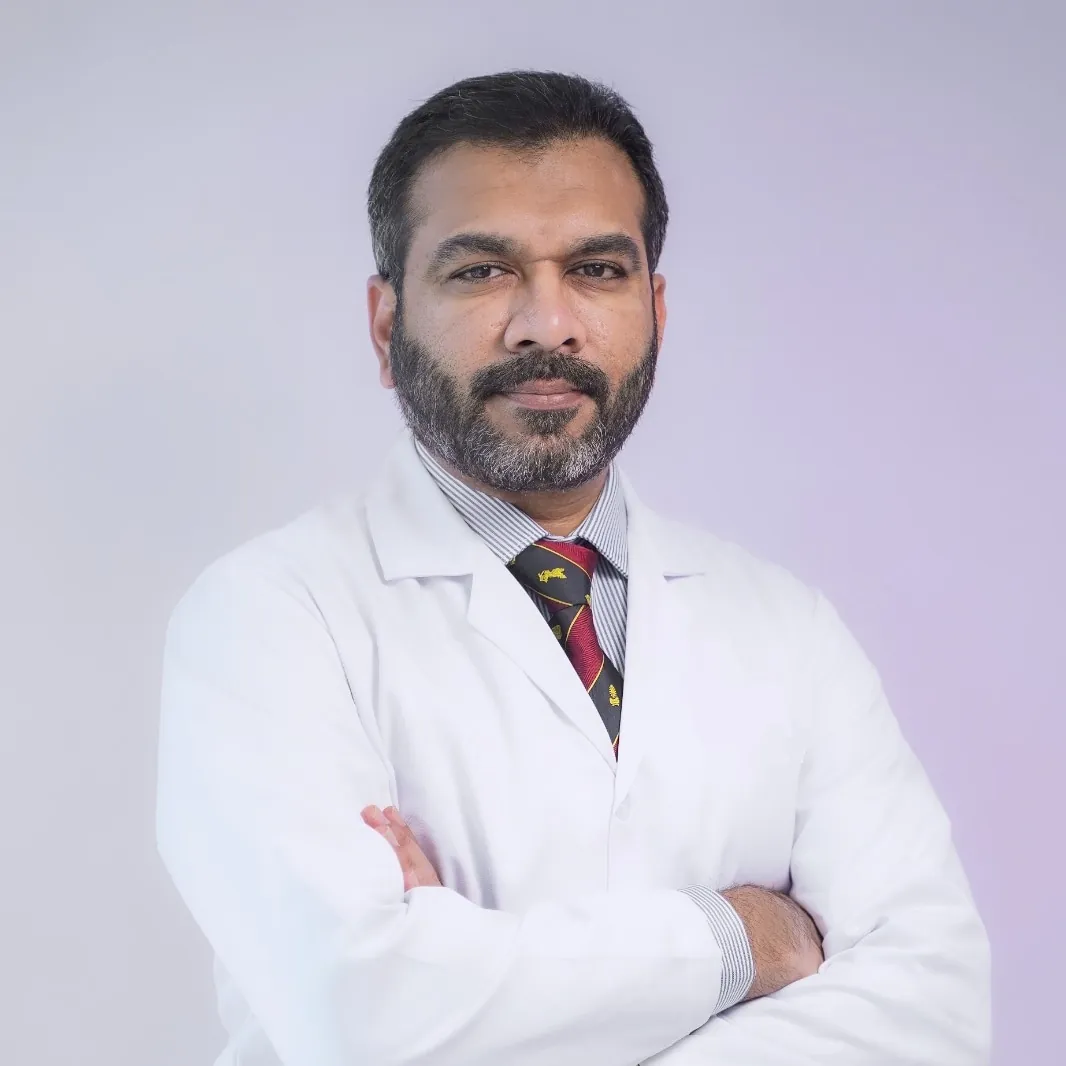
Dr. Chetan M. Dojode
FRCS (Tr&Orth) UK · FEBOT
GMC Specialist Register
Clinic Locations
OSR — OrthoSportsRobotics Clinic / Aarna Clinic, Sahakar Nagar
1182/1, 20th Main Road, A Block,
Bengaluru 560092