Surgical websites tend to describe recovery in its best light. This page is deliberately written the other way round — describing what patients commonly find harder than they expected, alongside what usually goes better.
The single most consistent theme is that the first two weeks after joint replacement are harder than most people anticipate, and the improvement after six weeks is faster than most people anticipate. Patients who know this in advance cope considerably better than those who do not, because the difficult early period is understood as expected rather than as a sign something has gone wrong.
Sleep is commonly disturbed for the first few weeks, particularly after knee replacement. Swelling around an operated knee frequently persists in some degree for three to six months and is not a cause for alarm on its own. Bruising can track well away from the wound under gravity and looks more dramatic than it is.
Progress is rarely a straight line. Most patients have a setback week — a few days where the joint is more painful or stiffer than the week before, often after doing more than usual. This is normal, and it is not evidence that the operation has failed.
What most reliably separates a good recovery from a difficult one is not the implant or the technique. It is the condition of the muscles before surgery and the consistency of physiotherapy afterwards. This is the part of the outcome that belongs to the patient, and it is worth taking seriously.
What patients commonly report
- ✓Pain relief from arthritic pain is often immediate
- ✓Walking begins on day one
- ✓Hospital stay shorter than anticipated
- ✓Sleep improves markedly once night pain resolves
- ✓Confidence returns quickly after six weeks
- →First two weeks demand real effort
- →Sleep disturbed early on
- →Knee swelling persists for months
- →Progress is not linear — setback weeks occur
- →Physiotherapy is work, not passive treatment
A note on outcomes and individual results
The descriptions on this page reflect commonly observed recovery patterns and published rehabilitation evidence. They are not a prediction of your own result. Recovery varies genuinely between individuals, and no surgeon can guarantee an outcome. Your own expected course — including the specific risks that apply to you — will be discussed with you before any operation is agreed.
Practice across two health systems
Dr. Chetan M. Dojode has operated in both the United Kingdom and India. His UK joint replacement practice is recorded on the National Joint Registry (NJR) — the world’s largest independent registry of joint replacement outcomes, which tracks implant survival and revision rates for every procedure submitted. The principles of systematic outcome tracking and evidence-based practice that underpin his UK joint replacement practice continue to inform his joint replacement practice in Bengaluru.
Frequently Asked Questions
How long does recovery from knee replacement really take?
Walking begins on day one and most patients are independent indoors within two to four weeks. The substantial improvement occurs between six weeks and three months. Swelling and the final refinement of movement continue improving for up to a year. The first fortnight is the hardest part.
Is it normal for my knee to still be swollen months after surgery?
Yes. Some degree of swelling around a replaced knee commonly persists for three to six months and can fluctuate with activity and weather. Swelling that is increasing, hot, associated with fever or with increasing pain should always be reported promptly.
Why is my progress going backwards some weeks?
Setback weeks are common and usually follow a period of doing more than usual. Provided there is no fever, wound discharge, calf pain or sudden severe pain, a temporary increase in soreness and stiffness is part of a normal recovery curve rather than a complication.
What can I do before surgery to recover faster?
Strengthen the muscles around the joint, optimise your weight, stop smoking, and get diabetes and blood pressure well controlled. Patients who arrive fitter recover measurably faster. This preparation period is often called prehabilitation and it is genuinely worthwhile.
Will I be able to return to my normal activities?
Most patients return to walking, cycling, swimming, driving, work and travel. High-impact activities such as running and contact sport are generally discouraged after joint replacement because of the load placed on the implant. What is realistic for you will be discussed before surgery.
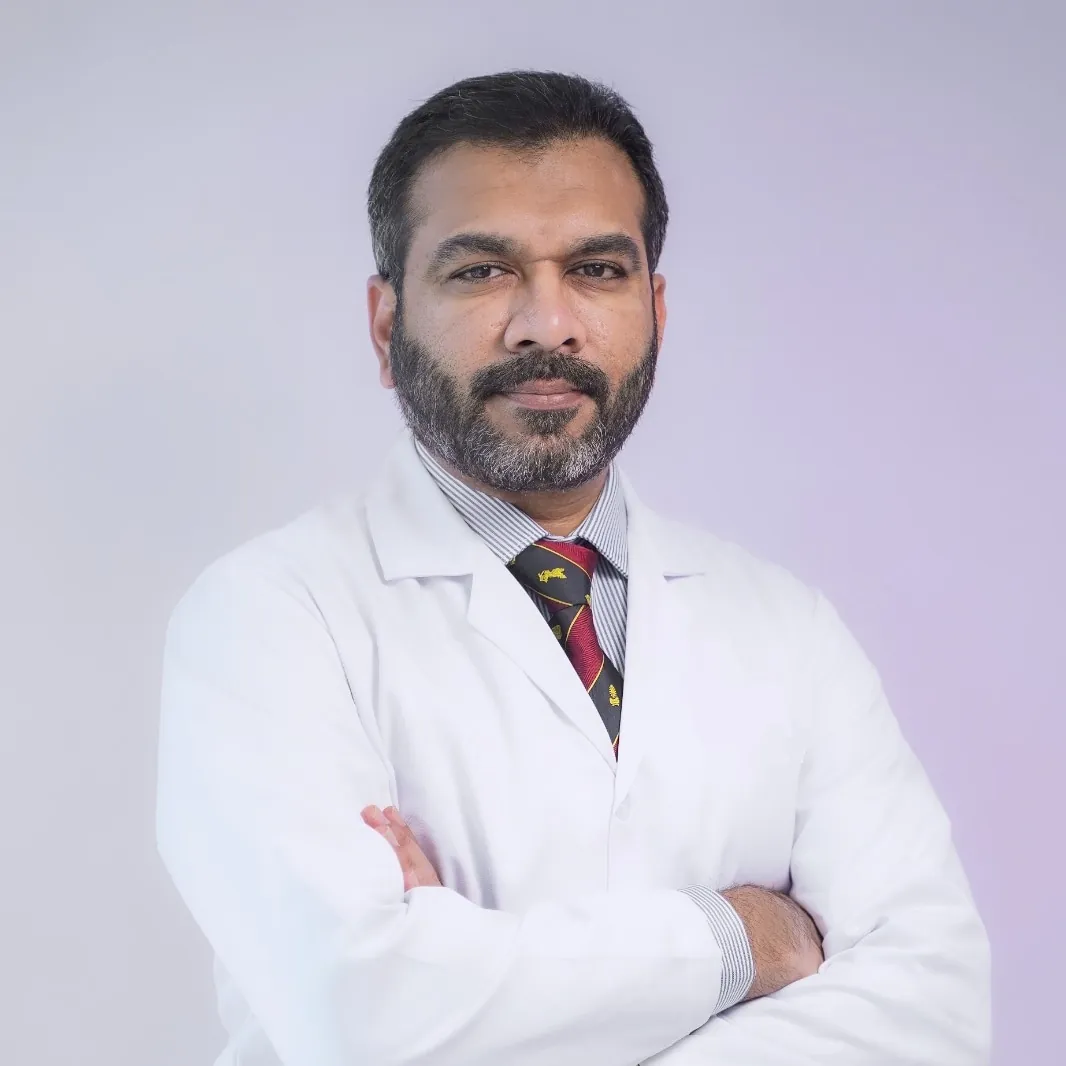
Dr. Chetan M. Dojode
FRCS (Tr&Orth) UK · FEBOT
GMC Specialist Register
Clinic Locations
OSR — OrthoSportsRobotics Clinic / Aarna Clinic, Sahakar Nagar
1182/1, 20th Main Road, A Block,
Bengaluru 560092