ACL (anterior cruciate ligament) tears are among the most common and debilitating sports injuries — affecting footballers, cricketers, badminton players, and recreational athletes across Bangalore. Dr. Chetan M. Dojode FRCS (UK), FEBOT is a UK-trained sports orthopaedic surgeon with extensive NHS experience in arthroscopic ACL reconstruction.
ACL reconstruction is performed arthroscopically — through tiny keyhole incisions — using a tendon graft to replace the torn ligament. Dr. Chetan M. Dojode uses an anatomic ACL reconstruction technique with optimised graft placement for rotational stability, reducing re-injury risk and enabling return to competitive sport.
Dr. Chetan M. Dojode has treated competitive athletes including Sports Authority of India athletes, and understands the specific demands of high-performance sport on the knee. He practises at Sparsh Hospital Yelahanka and OSR — OrthoSportsRobotics Clinic / Aarna Clinic, Sahakar Nagar — serving athletes across North Bangalore, Hebbal, Yelahanka, and Sahakar Nagar.
Do You Need ACL Reconstruction?
Not every ACL tear needs surgery. The decision depends on the completeness of the tear, your knee's stability in daily life, and whether you want to return to pivoting sports such as football, badminton, kabaddi or cricket. The signs that usually point towards reconstruction include:
- ›A complete ACL tear confirmed on clinical examination and MRI
- ›The knee gives way or feels unstable when turning, twisting or landing
- ›You wish to return to pivoting or contact sport
- ›An associated meniscus or cartilage injury needs protecting from further damage
- ›You are young or physically active, where an unstable knee risks long-term arthritis
ACL Graft Options — Hamstring, Patellar & Quadriceps Tendon
The torn ACL cannot simply be stitched back together — it is replaced with a graft, most often taken from your own body (an autograft). Dr. Chetan M. Dojode discusses the graft choice with every patient, matching it to your anatomy, sport and activity level.
Hamstring tendon autograft
The most widely used graft. Taken through a small incision, it avoids the front of the knee and is well suited to most recreational and competitive athletes. Reliable strength and low donor-site discomfort.
Patellar tendon (BTB) autograft
A bone–tendon–bone graft that heals bone-to-bone in the tunnels. Often preferred for high-demand pivoting and contact athletes who need the most robust fixation. A period of anterior knee care is part of rehabilitation.
Quadriceps tendon autograft
A strong, thick graft with minimal donor-site pain, increasingly used in both primary and revision reconstruction. A good option where a larger graft is needed.
Donor (allograft) tissue
Graft from a tissue bank, generally reserved for revision surgery or older, lower-demand patients. In young pivoting athletes an autograft is usually preferred because of lower re-rupture rates.
What Happens During ACL Reconstruction Surgery
ACL reconstruction is a day-case or short-stay keyhole procedure, usually taking around an hour. In outline:
- 1Anaesthesia — general or regional, discussed with the anaesthetist beforehand.
- 2Arthroscopy — the knee is inspected and any meniscus or cartilage injury is treated at the same time.
- 3Graft harvest and preparation — the chosen tendon graft is taken and shaped.
- 4Anatomic tunnel placement — bone tunnels are positioned to reproduce the natural ACL for rotational stability.
- 5Graft fixation — the graft is passed and secured, and knee stability is checked.
- 6Recovery — most patients go home the same or next day and begin physiotherapy straight away.
ACL Recovery & Return to Sport
Recovery is a staged, criteria-based process rather than a fixed calendar. Return to competitive sport typically takes 9–12 months, cleared on strength and function tests — not the date alone. A typical path:
Read more on the ACL recovery & return-to-sport timeline, or whether you are a candidate on do I need ACL reconstruction?
Why Choose Dr. Chetan M. Dojode for ACL Reconstruction?
- ✓Arthroscopic (keyhole) technique — tiny incisions
- ✓Anatomic graft placement for rotational stability
- ✓Hamstring or patellar tendon graft options
- ✓Sport-specific rehabilitation programmes
- ✓Return to competitive sport at 9–12 months
- ✓Criteria-based clearance — not arbitrary timelines
- ✓Experience with elite and recreational athletes
- ✓Same-day surgery possible
Dr. Chetan M. Dojode — International Credentials
The only FRCS (UK) + FEBOT + GMC Specialist Registered orthopaedic surgeon practising in North Bangalore.
Frequently Asked Questions
How long does ACL recovery take in Bangalore?+
Return to competitive sport after ACL reconstruction typically takes 9–12 months. This is criteria-based — quadriceps strength symmetry, functional performance tests, and psychological readiness — not an arbitrary timeline. Premature return significantly increases re-injury risk.
Is ACL surgery done arthroscopically?+
Yes. Dr. Chetan M. Dojode performs all ACL reconstructions arthroscopically — through tiny keyhole incisions using a camera and specialised instruments. This means minimal scarring, less pain, and faster recovery compared to open surgery.
Can ACL tears heal without surgery?+
Partial ACL tears in less active patients may be managed conservatively with physiotherapy. However, complete ACL tears in active patients wishing to return to pivoting sports almost always require surgical reconstruction to restore knee stability and prevent secondary meniscal and cartilage damage.
What graft is used for ACL reconstruction?+
Dr. Chetan M. Dojode uses hamstring tendon or patellar tendon autografts for ACL reconstruction. The choice depends on patient anatomy, activity level, and sport. Both grafts have excellent published outcomes for return to sport.
Does Dr. Chetan M. Dojode perform ACL surgery in Yelahanka?+
Yes. ACL reconstruction is performed at Sparsh Hospital Yelahanka, New Airport Road, Nehru Nagar, Bengaluru 560064 — serving patients from Yelahanka, Hebbal, Jakkur, Devanahalli and North Bangalore.
How soon after an ACL injury should surgery be done?+
ACL reconstruction is usually not done immediately. The knee is first allowed to settle — swelling reduced and full movement regained — over a few weeks of physiotherapy, which lowers the risk of post-operative stiffness. An associated locked or displaced meniscus tear may bring surgery forward. Dr. Chetan M. Dojode advises on the right timing for your knee after examination and MRI.
How much does ACL reconstruction cost in Bangalore?+
The cost of ACL reconstruction depends on the graft and implants used, the hospital category, room type, and whether the procedure is covered by health insurance. Most ACL reconstructions are covered by insurance and cashless approval is available at Sparsh Hospital Yelahanka. Please contact the clinic for a personalised estimate for your case.
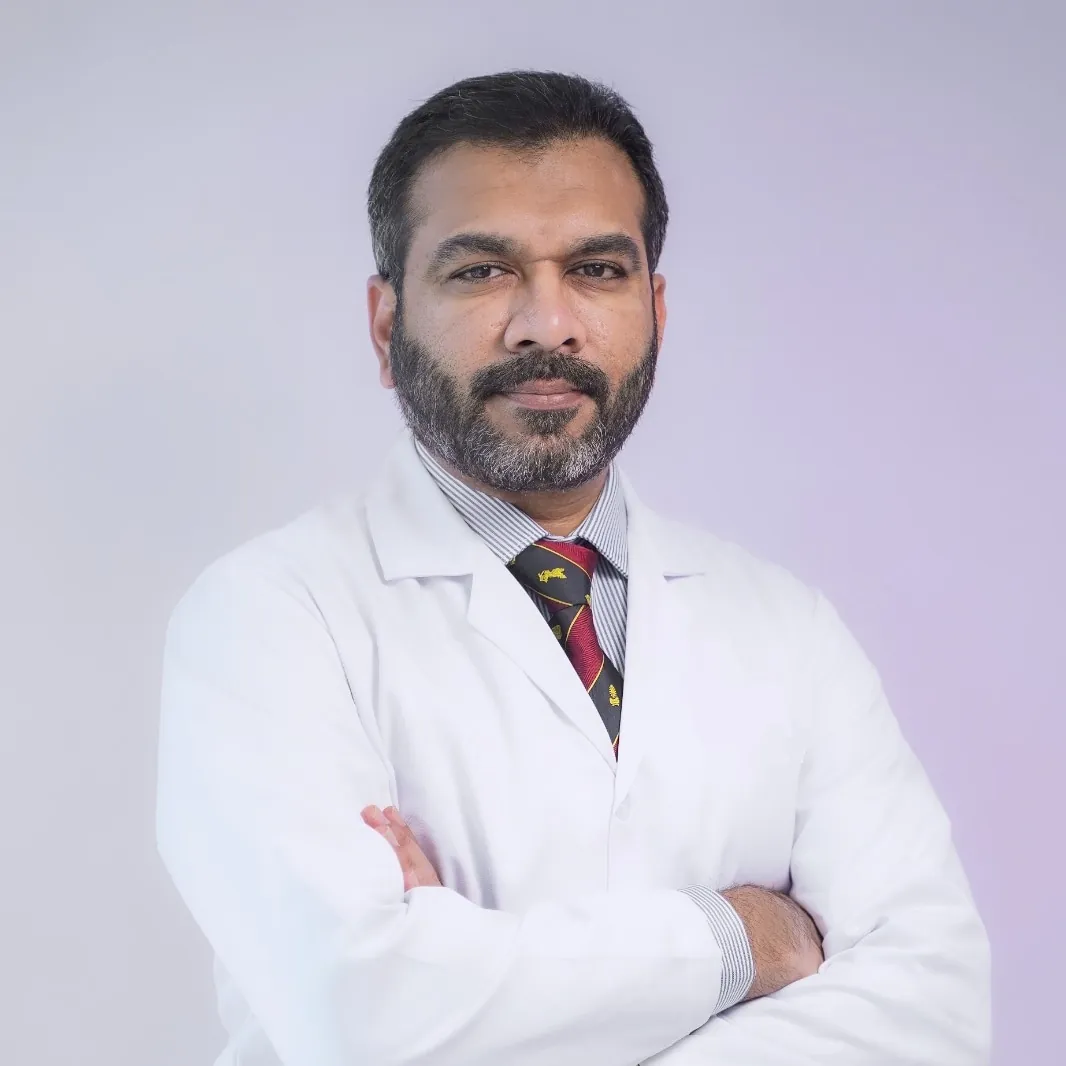
Dr. Chetan M. Dojode
FRCS · FEBOT · GMC Specialist Register
Book Appointment +91 94809 09009 WhatsAppClinic Locations
Sparsh Hospital Yelahanka
New Airport Road, Nehru Nagar,
Yelahanka, Bengaluru 560064
OSR — OrthoSportsRobotics Clinic / Aarna Clinic
1182/1, 20th Main Road, A Block,
Sahakar Nagar, Bengaluru 560092